If Your Roof
Sheds Water Within a Day
Sloped steel that dries quickly is where acrylic does its best work.
Start With
Acrylic Base and Top Coat
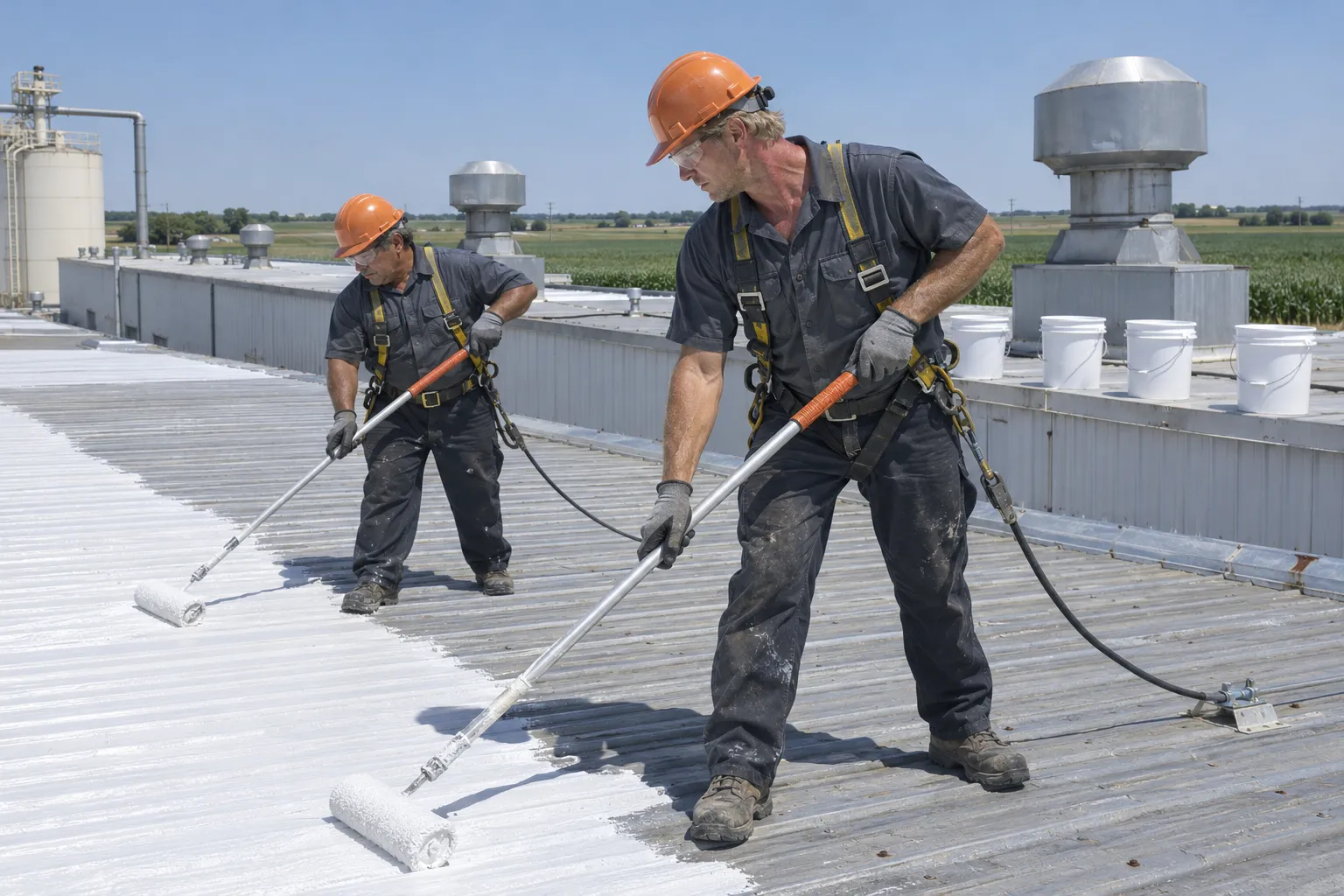
As a Hastings acrylic roof coating contractor, we roll and spray water-based acrylic over primed steel on shops, plants, and storage buildings with good slope.
Fit Check
Hastings acrylic roof coating depends on drainage and weather more than any other system. Four roofs and where each starts.
Sloped steel that dries quickly is where acrylic does its best work.
Acrylic Base and Top Coat
Those corners get a ponding-grade coating while the slopes stay acrylic.
Acrylic With Spot Silicone
Cold nights and heavy dew slow acrylic cure, so the job waits for a milder stretch.
Schedule for Spring
Wide areas of standing water rule acrylic out for that section.
Roof Conditions
Acrylic needs a clean, primed, well-drained surface. These are the conditions we fix before the first coat.
Rust stains coming through old paint would show through acrylic too. Those areas are cleaned to firm steel and primed with a rust-inhibiting primer.
Screws that spin in their holes get replaced with larger ones. Every head is then sealed with a brush-grade acrylic and fabric where needed.
Acrylic cannot cure on wet steel. Start times move later on dewy mornings, and coats stop early enough to set before evening.
Small low areas near gutters or valleys get a different coating or a drainage fix, since acrylic breaks down under standing water.
Side laps that have spread get stitch screws and fabric so the acrylic film can span the joint without splitting.
Brittle translucent panels are swapped for new ones or steel, then flashed so the acrylic coats run cleanly around them.
Acrylic is one choice among four. Here is how cure conditions and material cost compare across them.
| System | Cure Needs | Material Cost | Fits Best |
|---|---|---|---|
| Acrylic | Dry, mild days and nights | Lower per gallon | Sloped, fast-draining metal |
| Silicone | Cures with air moisture | Higher per gallon | Low spots and flat sections |
| Urethane | Moderate temperatures | Higher | Heavily walked areas |
| Spray foam | Dry deck, calm wind | Set by foam depth | Roofs needing insulation |
Benefits
Acrylic is a practical coating for sloped steel. These are the gains owners notice most.
White acrylic reflects sunlight, which cuts the heat that sloped steel passes into a shop or warehouse below.
A base coat and a contrasting top coat make missed spots easy to see and fix before the crew leaves.
A cleaned acrylic surface takes another acrylic coat or a silicone coat years later.
Acrylic costs less per gallon than silicone, which helps on large sloped roofs with good drainage.
Peeling paint usually means rust or chalk underneath. A roof walk shows how much prep the steel needs before acrylic goes on.
Ask for the roof walk by phone
Process
Acrylic work follows the weather. Each step waits for the right conditions before it starts.
Drainage is checked after rain, rust is mapped, and loose screws are counted so the prep list is clear.
Coats are scheduled for dry stretches with temperatures above the maker's minimum, day and night.
Panels are washed, rusted areas are primed, and the roof dries before any acrylic touches it.
Fastener heads and laps get brush-grade acrylic with fabric embedded at the joints.
The base coat cures, then the top coat goes on in a contrasting color at the listed thickness.
Some buildings need more than one system. These sit beside acrylic most often.
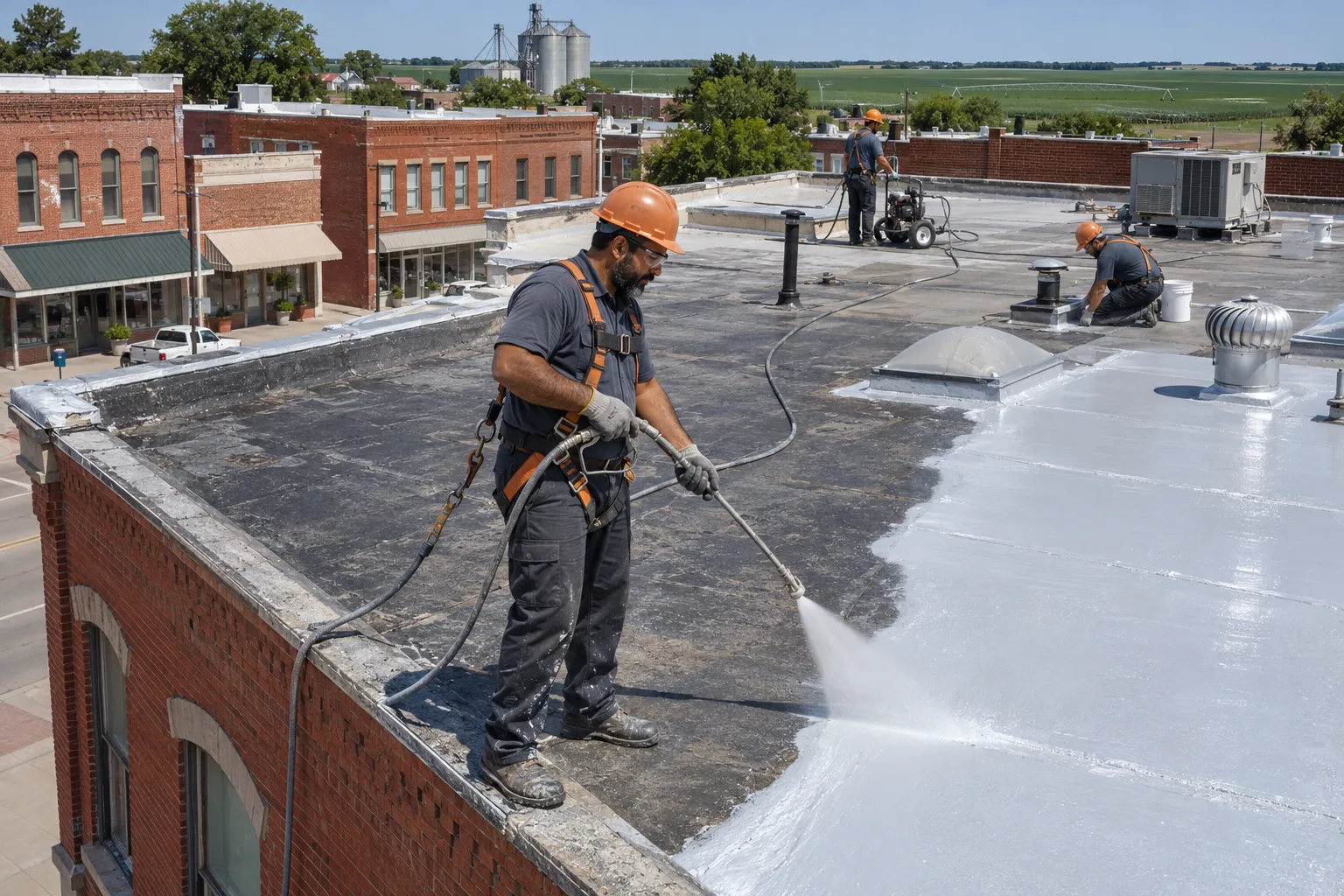
Low corners and flat additions that hold water take silicone while the sloped steel gets acrylic.
Hastings Silicone Roof Coating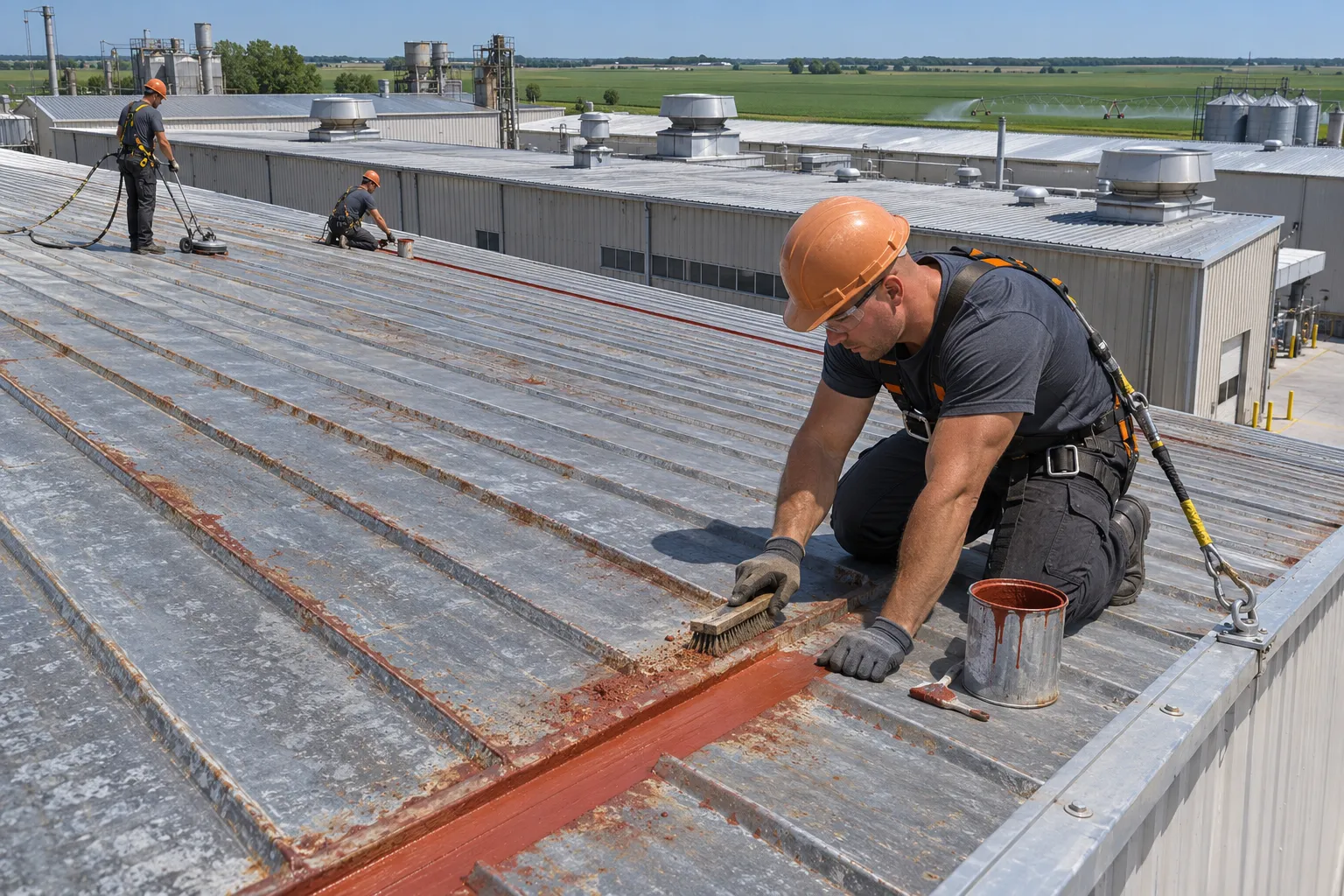
Full restoration of rusted steel, with screw replacement and lap fabric, comes before any acrylic system.
Hastings Commercial Metal Roof Coating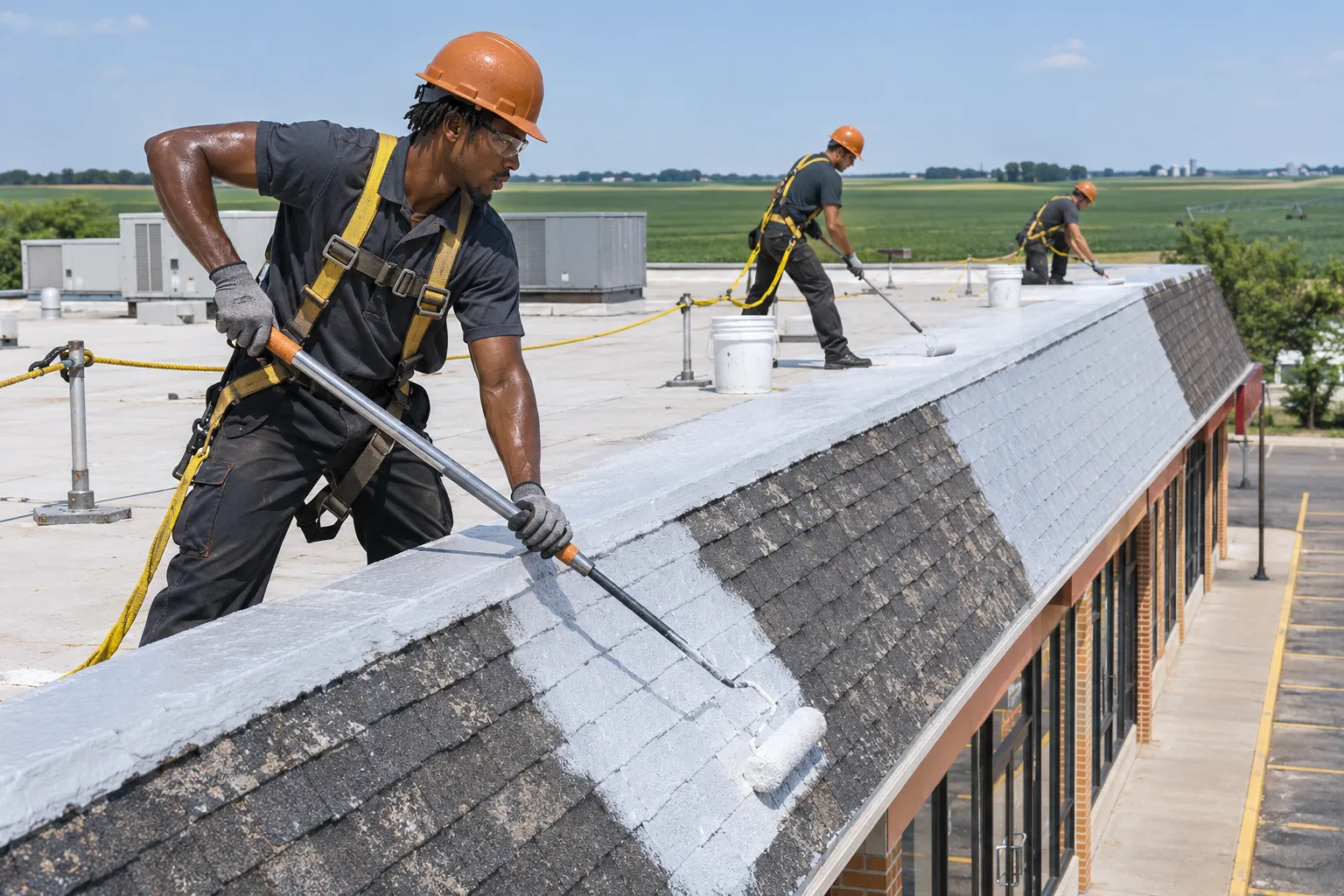
Office wings with asphalt shingles can be coated in the same weather window as the steel shop behind them.
Hastings Shingle Roof CoatingFAQ
Questions about acrylic on Hastings commercial roofs.
Yes, when the roof drains well and the steel is prepped. Acrylic bonds to primed panels and reflects sunlight, which cuts heat gain. It needs dry weather and temperatures above the maker's minimum to cure, and it is a poor choice where water sits for days.
Acrylic falls within our coating planning range of about $2.50 to $4.00 per square foot. The material costs less per gallon than silicone, but most systems take at least two coats, so labor adds up. Rust work, screw sealing, primer, and roof size set the final number.
Seams and screw lines move more than the open panel. Polyester fabric set into a brush coat of acrylic gives the film a reinforced band at those joints, so the coating stretches across each joint instead of splitting along it.
Long enough to set through, which changes with temperature, humidity, and film thickness. The coating maker lists a minimum dry time, and we schedule each coat so that window falls in clear weather. Heavy dew on a cool night slows cure, so late-day coats are avoided.
Most acrylic systems here use a base coat and a top coat, often in two colors so gaps show during application. Screw lines and seams get an extra brush-grade layer with fabric first. Total thickness follows the maker's specification for coverage per gallon.
Cure timing is the main one. Acrylic is water-based, so rain, dew, or cold before it sets can wash it off or weaken it. Spring and fall jobs need careful windows, and ponding areas need a drainage fix or a different coating there.
Late spring through early fall gives the longest stretches of dry days and mild nights. We watch the forecast for each coat, since acrylic needs to set before rain or a cold night, and we move a day rather than coat into bad weather.
Get a ballpark from the roof size, or call to plan the coats around the season.