If Your Roof
Shows Rust Only on the Surface
Powdery rust over solid steel is primed and coated in the same project.
Start With
Prime and Coat
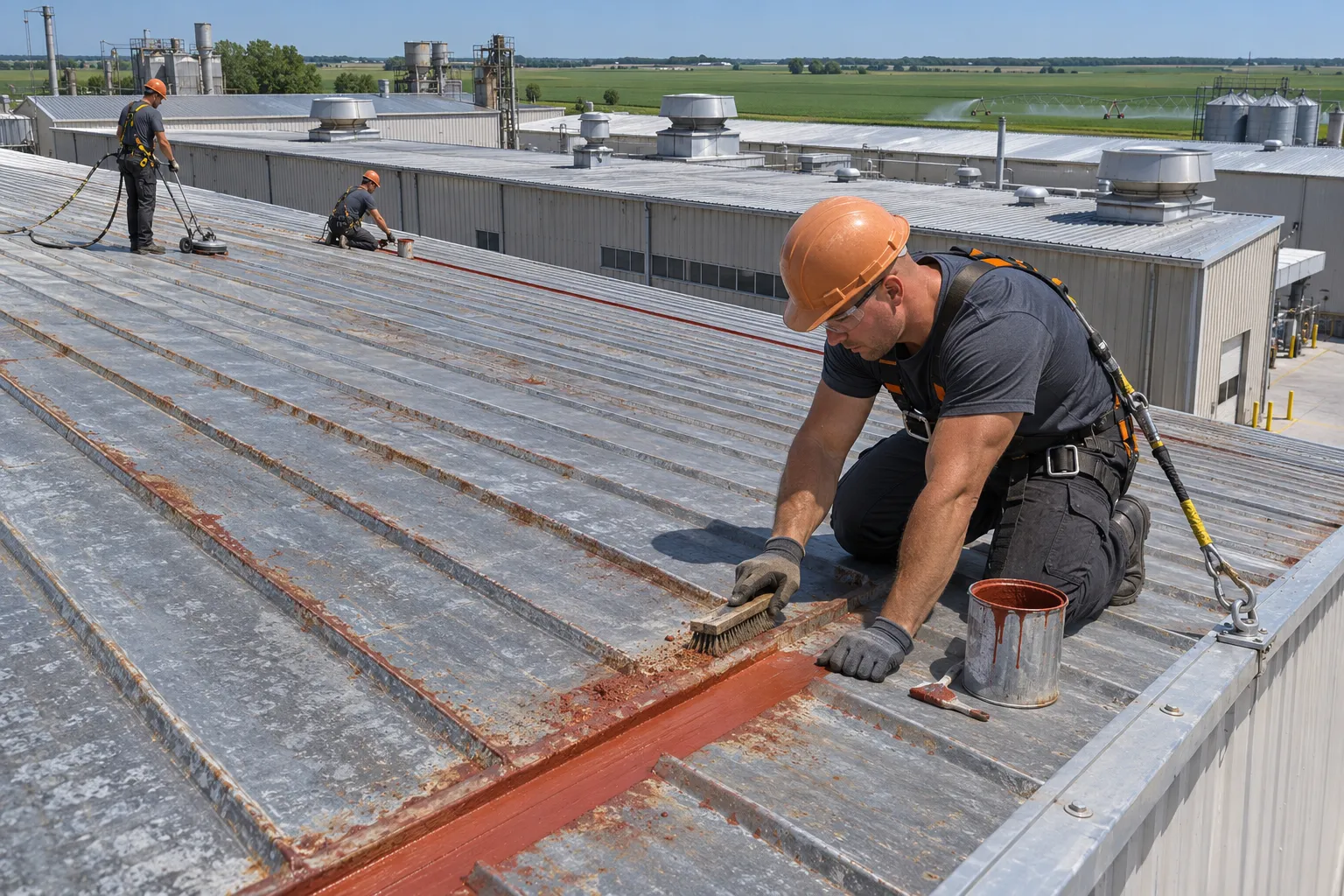
As a Hastings commercial metal roof coating contractor, we restore steel roofs on warehouses, co-op storage, and implement shops by treating rust, resealing screws, and coating the panels.
Is This Roof A Fit?
Hastings commercial metal roof coating works on most steel roofs with solid panels. These four situations show where coating starts and where repair comes first.
Powdery rust over solid steel is primed and coated in the same project.
Prime and Coat
Loose screws are pulled and replaced with oversized ones before any coats.
Fastener Work, Then Coat
A ponding area on the metal gets silicone, while the sloped panels can take acrylic.
Sagging panels point to framing trouble that needs repair before coating.
Structural Repair First
Roof Conditions
These six conditions show up on most commercial steel roofs we walk. Each card says what the prep crew does about it.
A steel roof can carry thousands of exposed screws, and each rubber washer dries out with sun and cold. Every head gets a dab of mastic or brush-grade coating so the field coats have a sealed base.
Water wicks between overlapping panels and rusts the steel from inside the lap. We clean the lap, prime it, and embed polyester fabric in a base coat across the joint.
Ridge caps lift in wind, and the foam closures under them crumble with age. Caps are re-fastened, gaps are filled, and the ridge line gets the same fabric treatment as the laps.
Translucent panels yellow and crack long before the steel around them wears out. They are replaced or covered with matching steel, then sealed at the panel edges.
Gutters hold debris and stay wet, so they rust faster than the roof. Holes are patched or the gutter is replaced, and eave trim is re-fastened before coating.
Steel grows and shrinks every day. An elastomeric coating stretches with that movement, and reinforced seams keep the joints from opening under it.
Every system we apply goes over primed steel. The right one depends on slope, ponding, foot traffic, and what the roof will need in ten years.
| System | Best On | Watch For | Recoat With |
|---|---|---|---|
| Acrylic | Sloped panels that drain fast | Standing water, cold cure days | Acrylic or silicone |
| Silicone | Low spots and flat additions | Dirt pickup, slick when wet | Silicone only |
| Urethane base coat | Walked roofs around rooftop units | Odor during application | Matching top coat |
| Spray foam | Roofs that need insulation or slope | Wind, overspray, top coat upkeep | The original top coat type |
Benefits
Restoring the steel you already own keeps the building working while the roof gets a new surface.
Fabric and coating bridge each end lap and side seam, so water stops finding a path between the panels.
Thousands of screw penetrations are covered by the coating film instead of depending on aging washers.
Light-colored coats reflect sunlight off panels that used to run hot, which helps shops and storage areas below.
Crews work from the roof surface, so docks, offices, and storage bays keep running during the project.
Count roughly how many stains or drips you see inside and where they sit. That tells us whether the fastener work is spot repair or the whole field.
Ask for the roof walk by phone
Process
Metal restoration follows a fixed order. Skipping the rust and fastener steps is what makes a coating peel early.
A roof walk counts loose screws, marks rusted laps, and checks for panels rusted through. Inside, we look for stains that line up with seams.
Pressure washing removes chalky paint, dirt, and loose scale. The steel must dry fully before primer, so we plan around dew and rain.
Rust-inhibiting primer goes on every rusted area and on bare steel at cut edges and laps, where the coating needs a firm grip.
Stripped screws are swapped for oversized ones, heads are sealed, and fabric is set into a base coat at laps, ridges, and curbs.
Two coats cover the full panel field at the maker's listed thickness. Wet film readings during spraying confirm each pass.
Metal roofs often share a building with other roof types. These systems cover the parts that steel coating does not.
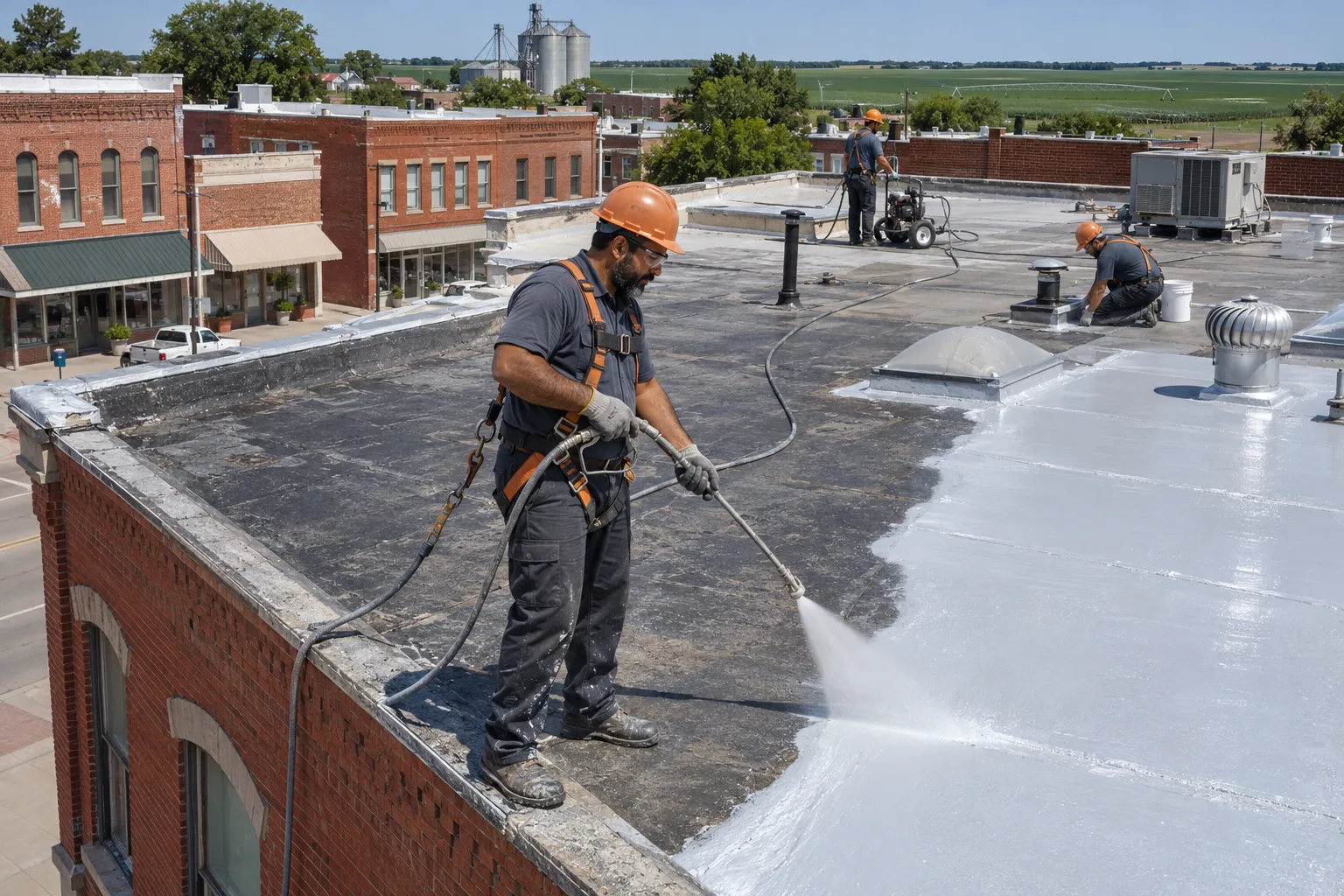
Flat office additions and low-slope sections that hold water take silicone, which tolerates ponding where acrylic would soften.
Hastings Silicone Roof Coating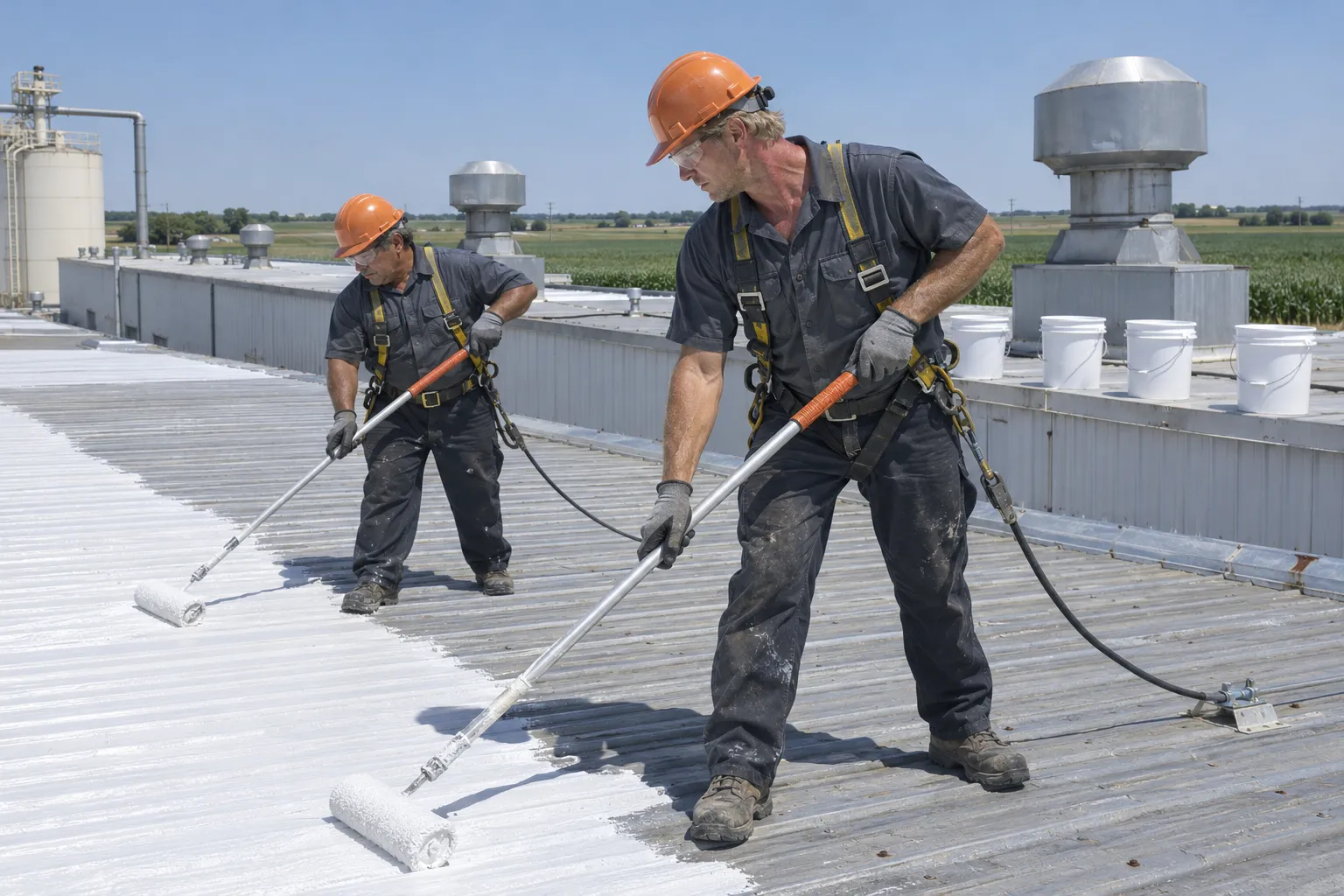
Steep, fast-draining steel can take an acrylic system in contrasting base and top coats, with a lower material cost per gallon.
Hastings Acrylic Roof Coating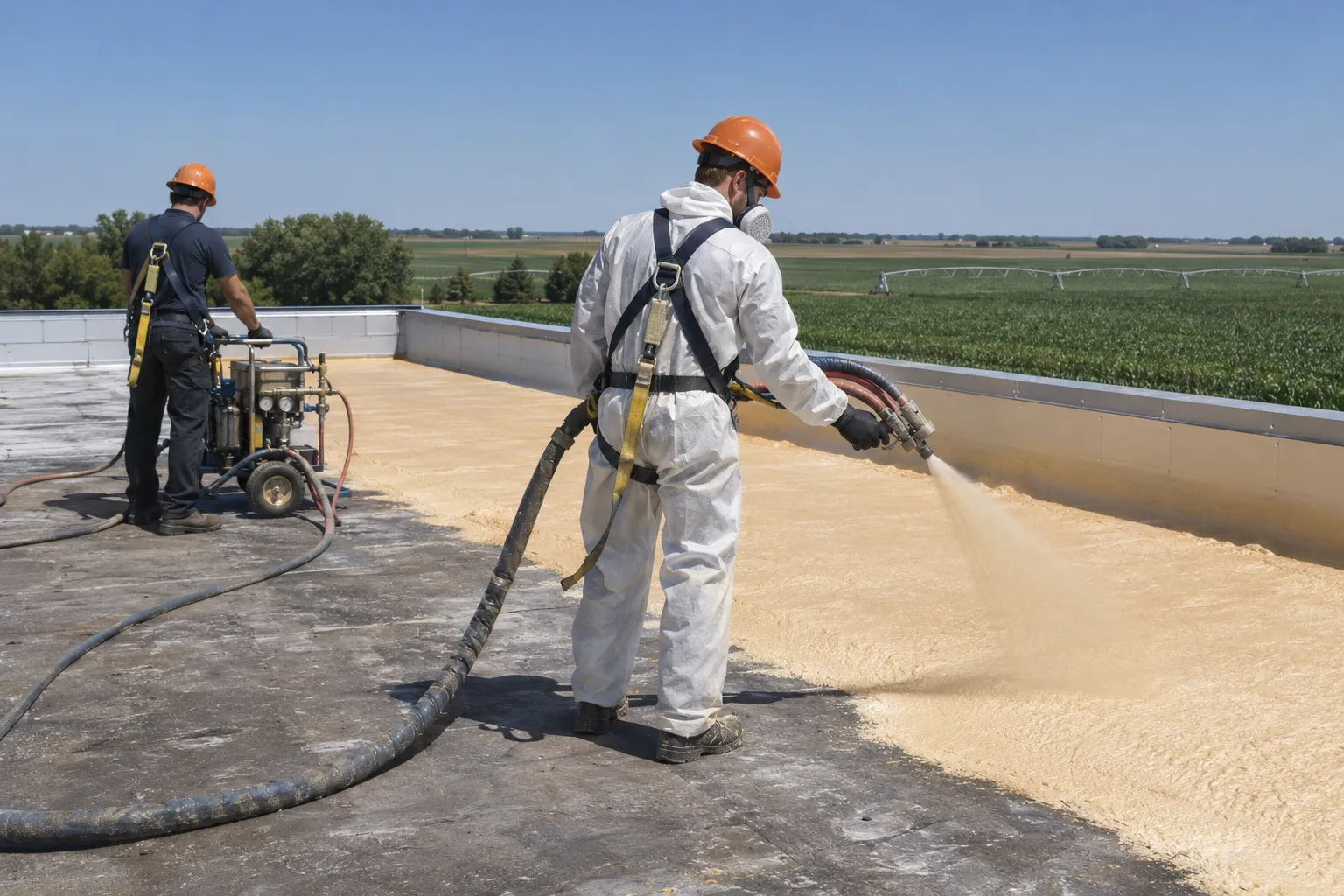
Heated shops that lose warmth through bare steel can add foam insulation over the panels, finished with a protective top coat.
Hastings Spray Foam RoofingFAQ
Questions owners ask about restoring steel roofs around Hastings.
Restoration covers cleaning, rust treatment, screw work, seam sealing, and a fluid-applied coating. Panels are washed, rusted steel is primed, and loose screws are tightened or replaced. Laps, ridges, and penetrations get fabric in mastic, and the final coats go on at a measured thickness so the roof sheds water as one membrane.
Yes, and they are the most common roof we coat. Each screw becomes a leak once its washer dries out, so stripped screws come out, oversized ones go in, and every head is sealed. The field coats then cover the panels and fastener rows together, closing hundreds of small openings at once.
Slope, ponding, and budget decide it. Silicone handles standing water and sun. Acrylic suits sloped panels that drain fast and costs less per gallon, and a urethane base coat helps where people walk the roof often. We pick from what the inspection shows and follow the coating maker's metal-roof requirements.
Daily heating and cooling makes steel panels expand and contract, which works screws loose and opens seams. Hastings has recorded 116°F in July 1936 and minus 30°F in February 2021, according to the National Weather Service. That range is why seams and screws are reinforced first, and why the coating has to stretch.
Plan on about $2.50 to $4.00 per square foot. Bigger roofs usually sit lower in that range because setup spreads over more area. Heavy rust, many loose screws, extra coats, or hard access push the number up, and wet insulation under the panels must come out before coating.
When the panels can be saved, yes. Coating plans at about $2.50 to $4.00 per square foot and replacement at about $5 to $8. The gap shrinks as more panels need replacing, so the inspection counts rusted-through sheets before any comparison.
Get a ballpark number from the roof size, or call to schedule a roof walk on your steel building.