If Your Roof
Has Flat Shingles With Light Granule Loss
That roof is a strong coating candidate once tabs and nails are sealed.
Start With
Clean, Seal, Coat
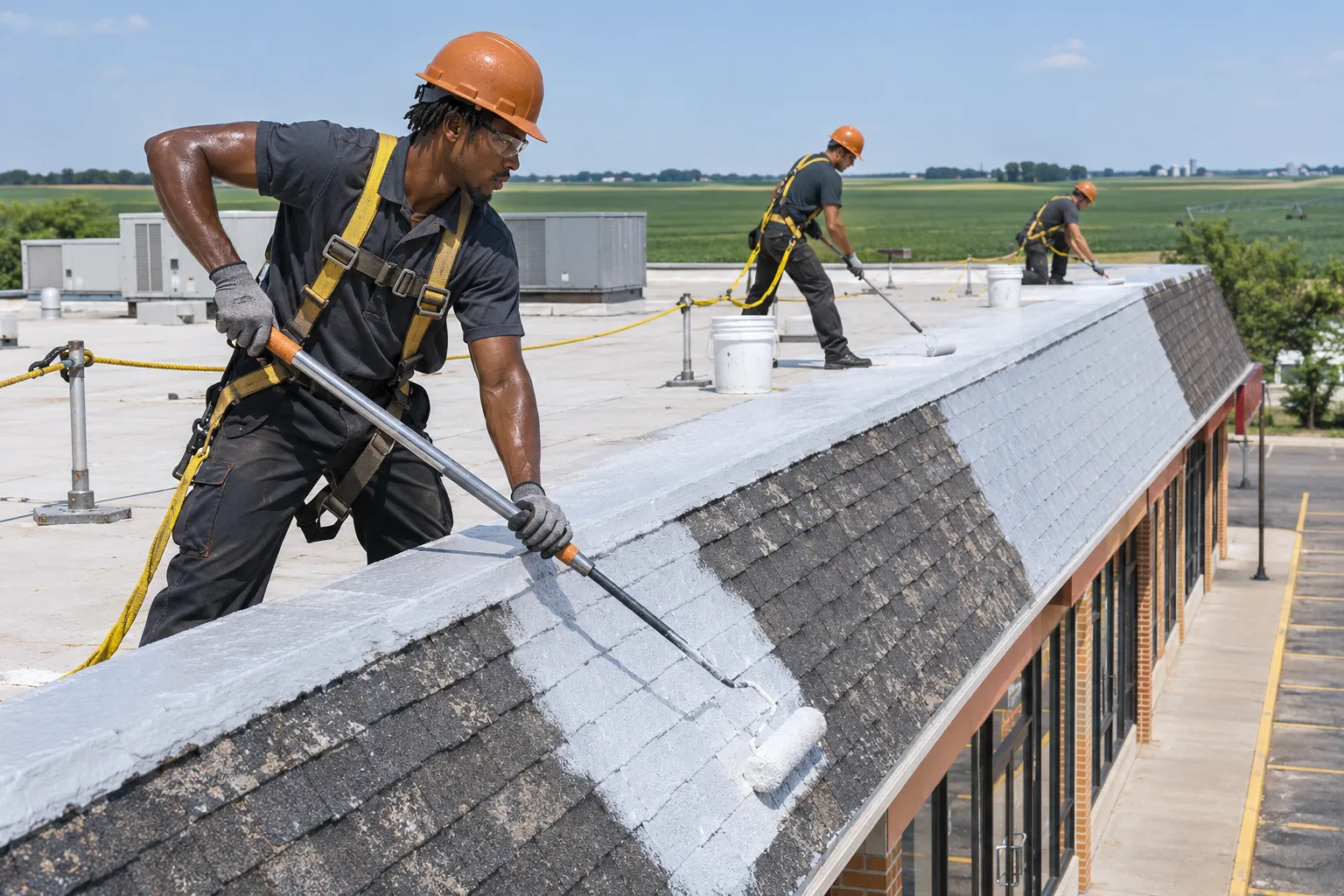
As a Hastings shingle roof coating contractor, we coat asphalt shingle roofs on offices, clinics, churches, and retail buildings when the shingles still lie flat.
Fit Check
Hastings shingle roof coating works only when the shingles are still doing their job. These four cases show where each roof starts.
That roof is a strong coating candidate once tabs and nails are sealed.
Clean, Seal, Coat
Those shingles get replaced with matching ones, then the whole slope is cleaned and coated as one surface.
Spot Repair, Then Coat
A soft deck means rot below, which coating cannot fix. The wet boards are cut out and replaced, then the slope is checked again.
Deck Repair First
When most shingles have failed, reshingling is the better call.
Reshingle
Roof Conditions
These conditions decide whether a shingle roof can take a coating, and what has to be fixed before it does.
A little granule loss is normal on aging shingles. Bare black mat across a slope means the shingle is near the end, and coating will not bring it back.
Wind lifts tabs that have lost their seal strip. They are glued back down with roofing cement before any coating goes on.
Nails that backed out or were face-nailed leak at the head. Each one is reset or sealed with cement.
Flashing where the roof meets a wall or chimney stack wears first. It is resealed or replaced before coating.
Moisture under the shingles shortens coating life. Soft or wet deck areas are opened and repaired first.
Hail knocks granules loose and bruises the mat. Badly bruised shingles are replaced so the coating has a firm base.
Shingle coating sits between spot repair and a full reshingle. Here is how the three choices compare on a commercial building.
| Option | Shingle Condition | Disruption | Debris |
|---|---|---|---|
| Spot repair | A few damaged tabs | Small | Very little |
| Shingle roof coating | Flat, intact, aging | Low, work stays on top | Very little |
| Reshingle | Brittle, curled, or soft deck | Higher, tear-off | Full tear-off load |
Benefits
Coating an intact shingle roof gives it a new surface without the tear-off.
Without tear-off, offices and churches below avoid the noise and dust of a full reshingle.
The coating covers granule-worn spots and seals small gaps between tabs.
A light coating reflects more sun than dark asphalt, which cuts heat moving into the building.
Old shingles stay on the roof instead of going to a dumpster in your lot.
Snap a photo of the gutter and the worst slope. It helps us judge whether the shingles can still be coated.
Ask for the roof walk by phone
Process
Shingle coating starts with a strict inspection because a failed shingle cannot be saved by a coat.
Shingles are checked for flatness and granule loss, and the deck is walked for soft spots.
Curled, cracked, or missing shingles are replaced so the surface is even.
A low-pressure wash removes dirt and algae without stripping more granules.
Loose tabs are glued down, nail heads are sealed, and flashing is repaired.
Coats are rolled and sprayed at the thickness listed for shingle roofs, which absorb some material.
Many shingle roofs sit on buildings with metal or flat sections too. These systems cover those parts.
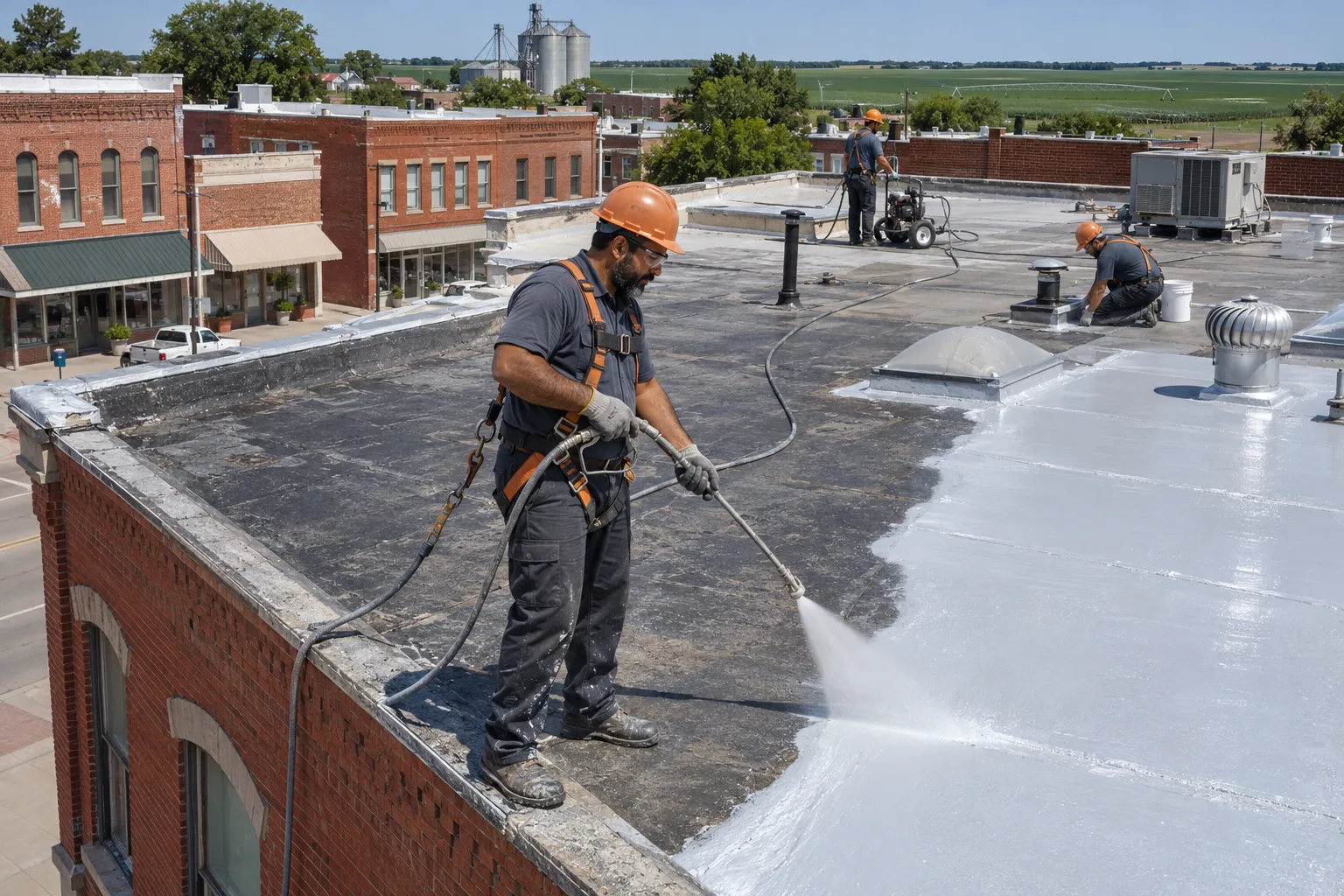
Flat roofs hidden behind a shingled mansard take silicone where water collects after storms, with drains cleared and seams reinforced first.
Hastings Silicone Roof Coating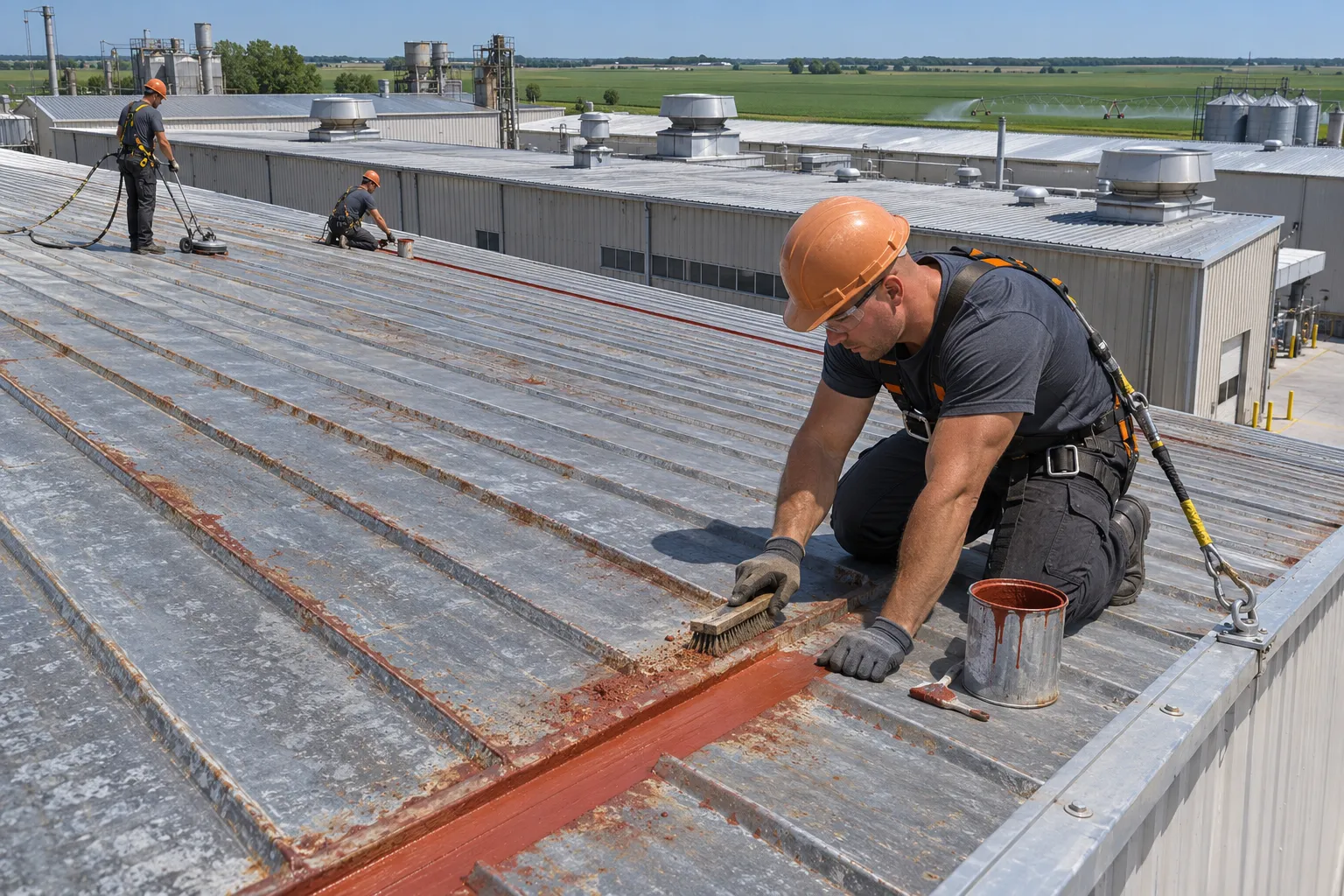
Steel shops and storage behind a shingled office get rust priming, screw replacement, and lap fabric under their own coating system.
Hastings Commercial Metal Roof Coating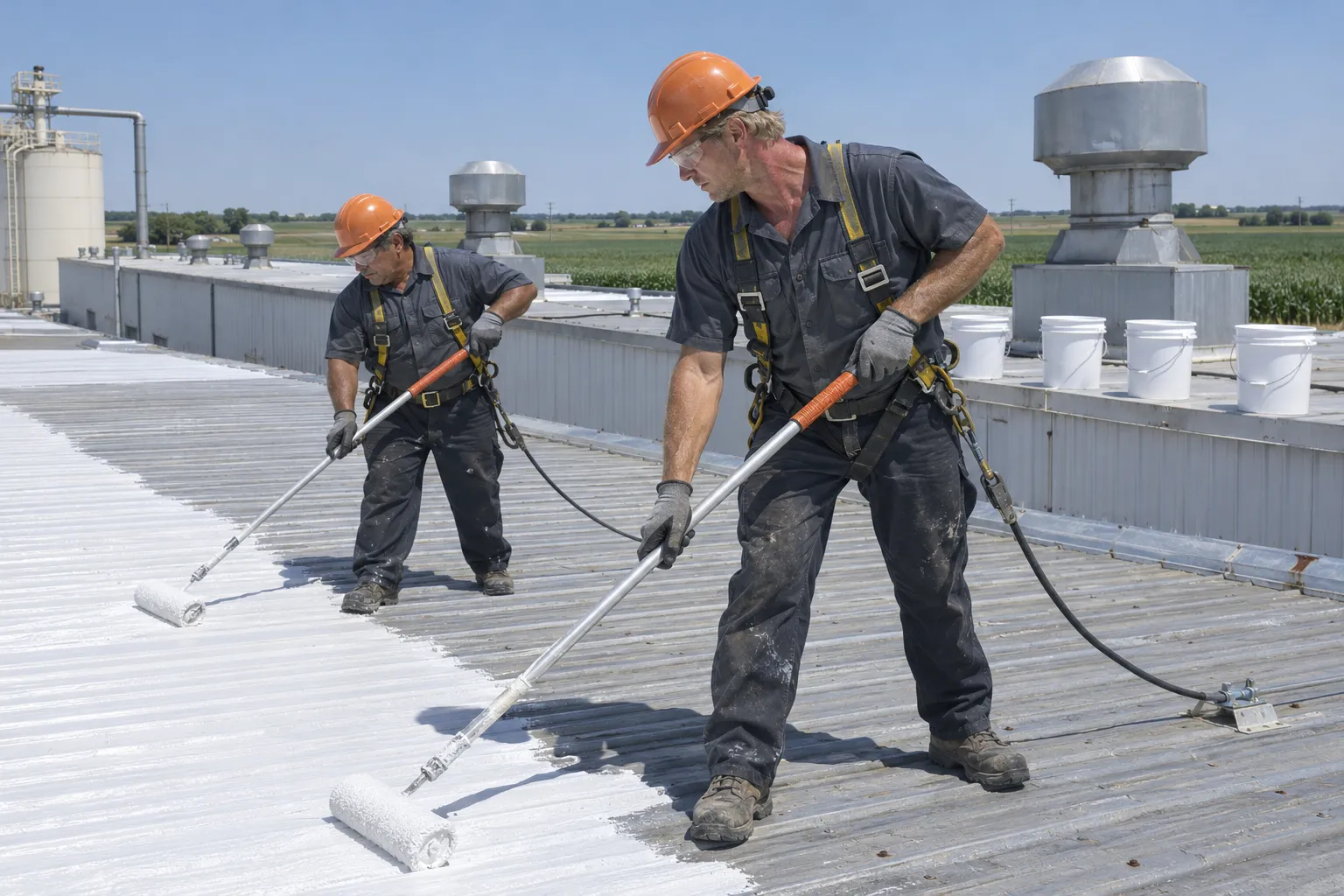
Sloped steel with good drainage can be coated with acrylic during the same visit, so the whole building is finished in one season.
Hastings Acrylic Roof CoatingFAQ
Questions about coating commercial shingle roofs in Hastings.
If the shingles still lie flat and hold granules, yes. We clean the surface, glue down loose tabs, and seal exposed nails first. Curled, cracked, or missing shingles are repaired before coating, and a roof that has lost its waterproofing layer underneath is not a coating job.
Yes. The work happens on the roof surface, so crew days are planned around services, events, and parking. Ladders and pails stay away from entrances, and each section is finished in one day so the roof is never left half coated over a weekend.
Offices, clinics, churches, and small retail buildings with flat shingles, firm decking, and light granule loss. Steep slopes need extra safety setup. Buildings with leaks in several places need repairs or partial reshingling before a coating makes sense.
We bend a few tabs to test for brittleness, look at granule loss across each slope, and walk the deck for soft spots. A shingle that cracks when lifted or a deck that gives underfoot points away from coating, and those findings go on a plain list for the owner.
When shingles are aging but intact, coating fits, and reshingling fits when they are brittle or curled or the deck is soft. Coating skips tear-off debris and disruption inside. Reshingling resets the roof at a higher cost, and the inspection looks at granules, flatness, and the deck first.
Coating thickness, shingle condition, and upkeep decide it. Makers rate products by applied thickness, and shingles absorb some material, so coverage varies. Hail, moisture under the shingles, and foot traffic shorten its life, while periodic inspection and spot recoats extend it.
Yes, the roof becomes one even color, usually white or light gray. On a street-facing slope, owners often choose a gray that sits closer to the old shingle tone. We show color options before the coating goes on.
Get a ballpark from the roof size, or call to have the shingles checked before you decide.