If Your Roof
Holds Water for Two Days After Rain
That is the case silicone was made for, once drains are cleared.
Start With
Silicone Over Primer
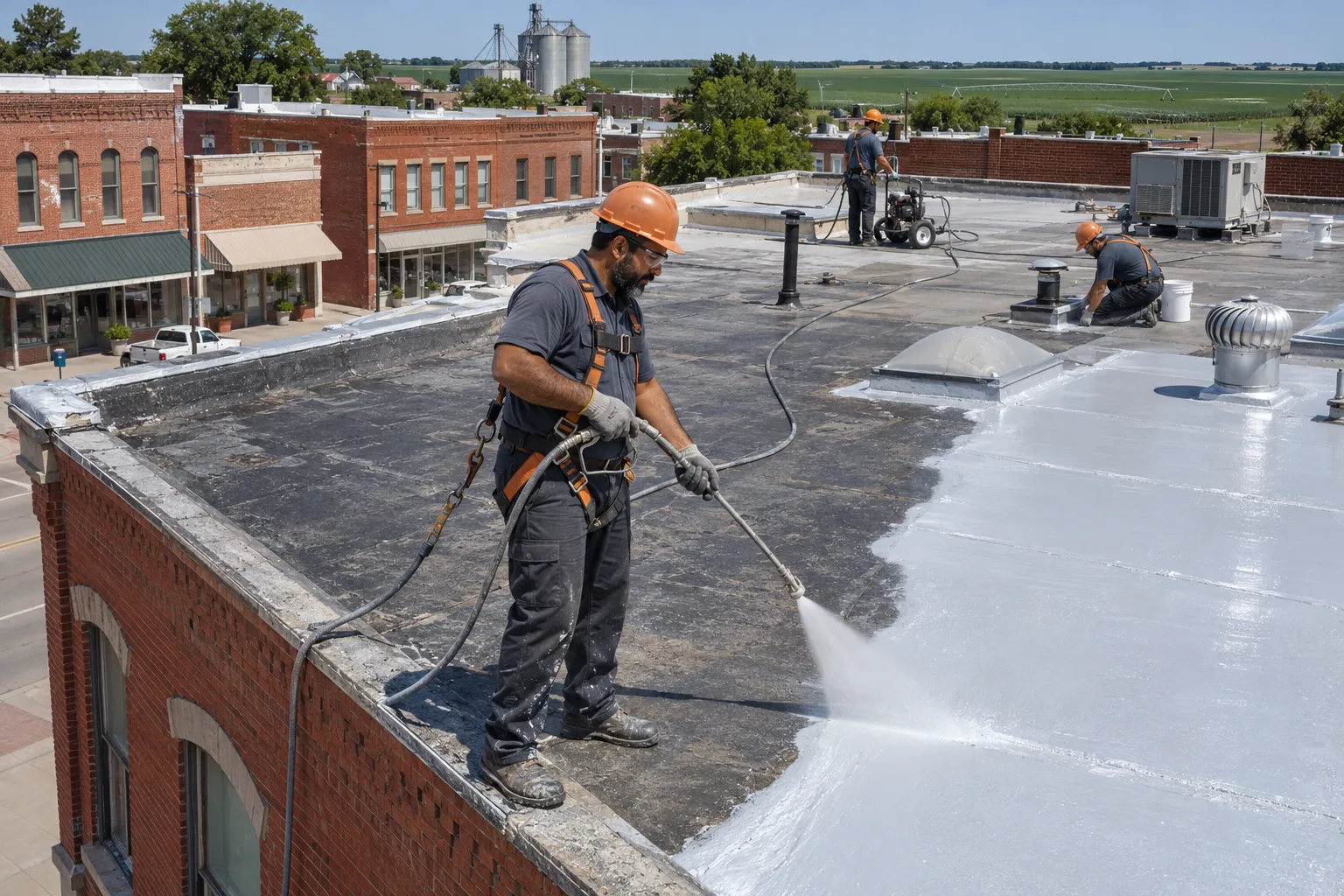
As a Hastings silicone roof coating contractor, we spray silicone over primed metal and flat roof sections where ponding water would break down other coatings.
Fit Check
Hastings silicone roof coating fits some roofs far better than others. Four common cases and where each one starts.
That is the case silicone was made for, once drains are cleared.
Silicone Over Primer
The flat part takes silicone and the sloped panels can take acrylic.
Split System
Heavy foot traffic tears silicone, so walkway pads go in with it.
Silicone Plus Walk Pads
Silicone can go over acrylic with primer, but never the reverse later.
Roof Conditions
These are the roof conditions that steer an owner toward silicone, and what has to happen to each before spraying.
Shallow water rings stay behind after a storm on low-slope panels and flat sections. Silicone tolerates that water, but we still clear drains and scuppers so the ponds shrink.
Leaves and grit block the outlets, which turns a short pond into a long one. Outlets are cleaned and their flashing is sealed before any coating.
An earlier acrylic or aluminum coating turns powdery. Washing and a bleed-blocking or bonding primer give silicone a surface it can grip.
Seams on flat additions split as the deck moves. Reinforcing fabric in a base coat bridges them before the full silicone coat.
Rooftop unit curbs and pipe boots leak where flashing has cracked. Each one is cleaned, primed, and wrapped with fabric and silicone.
Hail leaves dents and torn spots in old coatings. Damaged areas are cut back to firm material and patched so the new film is even.
Silicone is one of four systems we apply. This table compares them on the three things that most often decide a flat or low-slope roof.
| System | Ponding Water | Foot Traffic | Later Recoat |
|---|---|---|---|
| Silicone | Holds up under standing water | Needs walkway pads | Silicone only |
| Acrylic | Softens where water sits | Moderate | Acrylic or silicone |
| Urethane | Fair with a top coat | Handles heavy traffic | Matching system |
| Spray foam | Can be shaped to drain | Fair with granules | Original top coat type |
Benefits
Silicone earns its place on roofs that stay wet. Here is what it changes on those sections.
Silicone stays intact under water that sits for days, where water-based coatings would soften and wash thin.
Ultraviolet light breaks down many coatings, but silicone resists it, so it keeps its film on exposed flat roofs through hot Nebraska summers.
Low-slope roofs often take silicone in one or two passes over primer, which shortens the time crews spend on the roof.
A cleaned silicone surface takes a fresh silicone coat, so the system can be renewed instead of replaced.
Take a photo of the pond and the nearest drain before it dries. That shows us whether outlets need work before a silicone coat goes on.
Process
Silicone goes on in one pass more often than other coatings, so the prep before it carries most of the work.
Ponding areas are measured, drains are checked, and an adhesion test patch shows whether the old surface will hold silicone.
Washing removes dirt, chalk, and loose coating from the roof. Silicone sticks only to a clean, dry surface, so cleaning is never cut short.
Bare steel, rust, and old coatings get the primer the silicone maker lists for that surface.
Seams, curbs, drains, and pipe boots get fabric set in silicone before the field coat.
The field coat goes on at the listed thickness. Wet film gauges confirm coverage, and thin spots are recoated.
Silicone often works beside another system on the same building. These are the pairings we set up most.
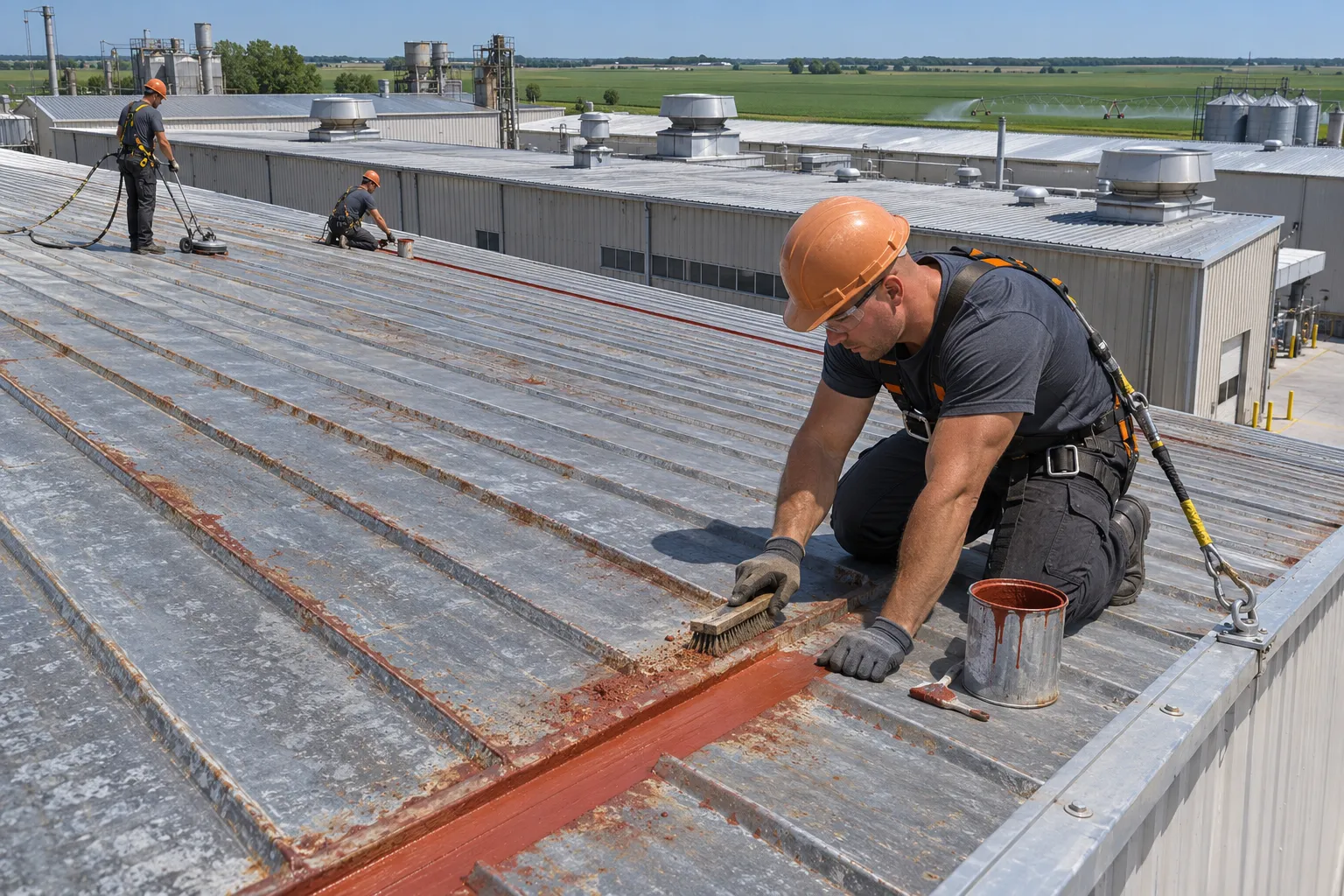
Steel roofs with exposed screws get fastener and lap work first, and silicone can then cover the low sections of that steel.
Hastings Commercial Metal Roof Coating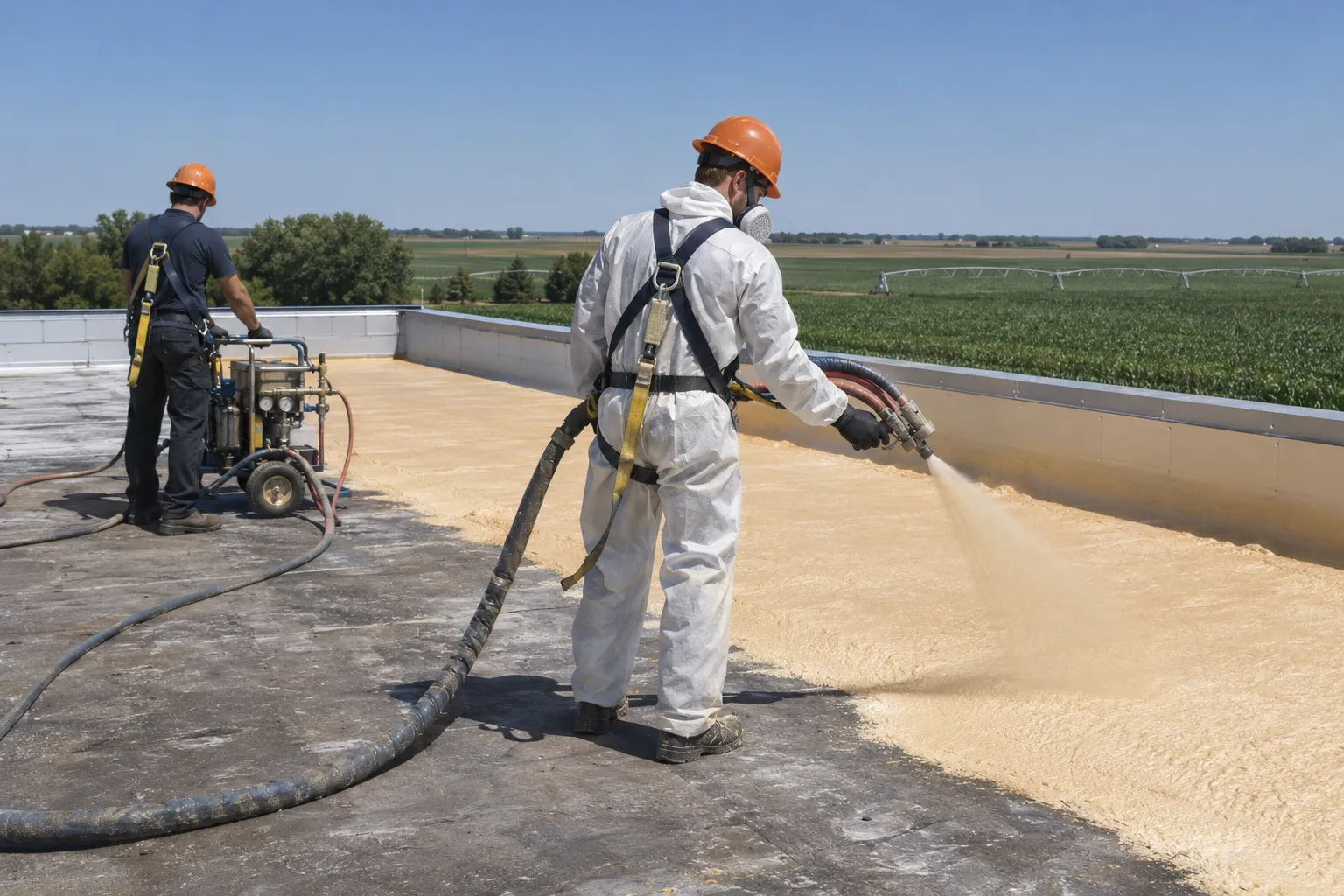
Foam can be built thicker at low spots to push water toward drains, and silicone is a common top coat over it.
Hastings Spray Foam Roofing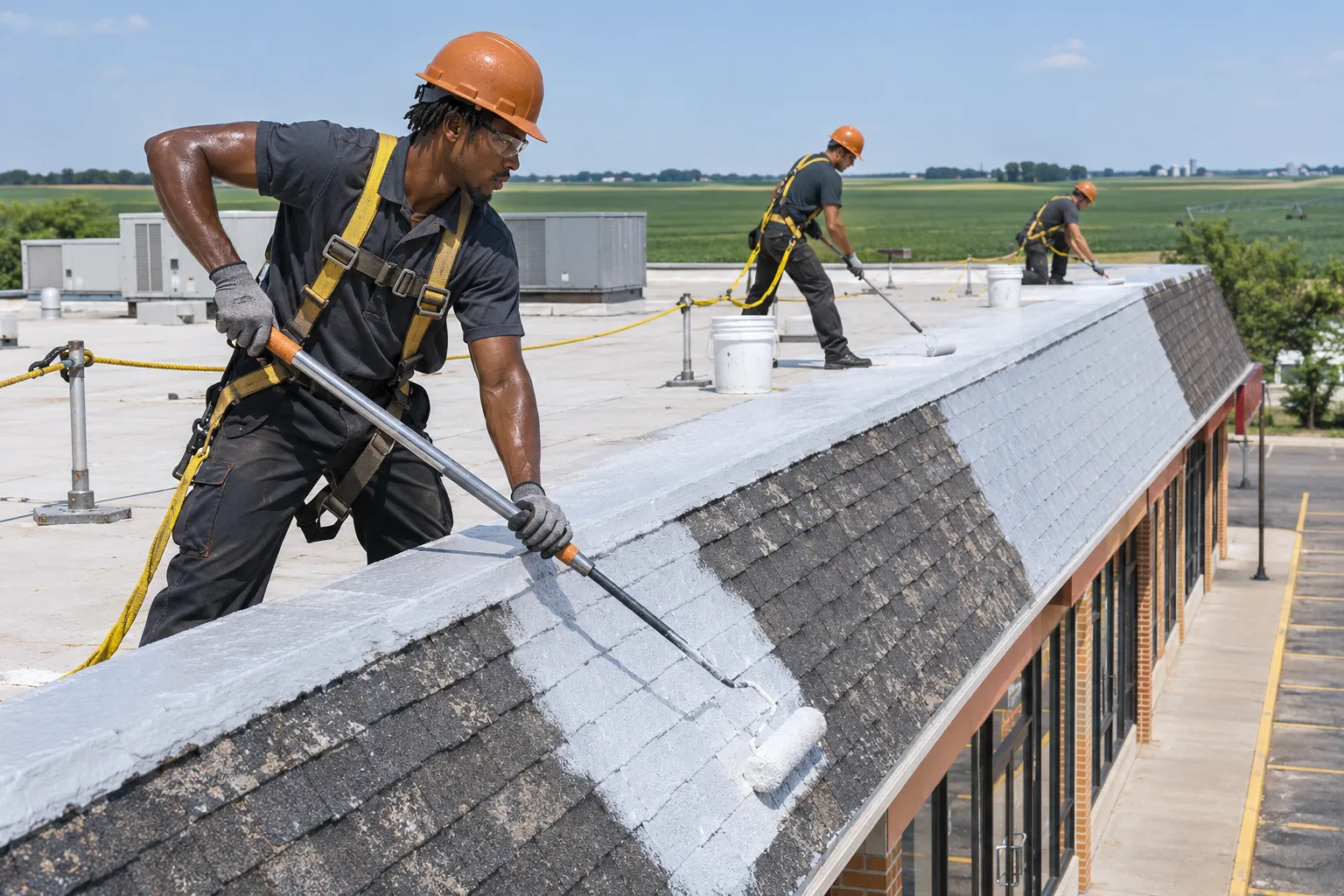
Mansards and sloped shingle sections on the same building can be coated while the flat roof gets silicone.
Hastings Shingle Roof CoatingFAQ
Answers about silicone on Hastings commercial roofs.
It falls within our coating planning range of about $2.50 to $4.00 per square foot. Silicone costs more per gallon but often needs fewer coats on low-slope roofs. Prep, primer, seam work, film thickness, roof size, and access move a project within that range.
One or two coats over primer and reinforced seams covers many metal roofs here. The count follows the film thickness the maker specifies, and a pail covers its labeled area only at that thickness. Wet film readings during spraying confirm each coat.
Usually, with the right primer. The old acrylic is washed, loose areas are scraped, and an adhesion test patch is run first. If the test holds, silicone goes over it. The reverse fails later on, because acrylic will not bond to silicone.
Thickness matters most. Coating makers rate silicone by dry film thickness, so a heavier build carries a longer rating. Ponding, hail, foot traffic, and dirt all wear it down, and a cleaned surface can take a new silicone coat to extend the system.
Low spots that hold water point to silicone, and good slope with quick drainage points to acrylic. Silicone resists ponding and sun but gathers dirt and turns slick when wet. Acrylic recoats easily and stays cleaner, though standing water breaks it down.
Dirt pickup, slick footing, and a one-way recoat path. Only silicone bonds well to silicone, so later recoats stay silicone. Wet silicone is slippery for service techs, and heavy traffic can tear it, which is why walkway pads go in on busy roofs.
Start with a ballpark from your roof size, or call and describe where the water sits.