If Your Roof
Loses Heat Through Bare Steel
Heated shops gain insulation from foam sprayed right over the cleaned panels, with the flutes filled first so the surface is even.
Start With
Foam Over Metal

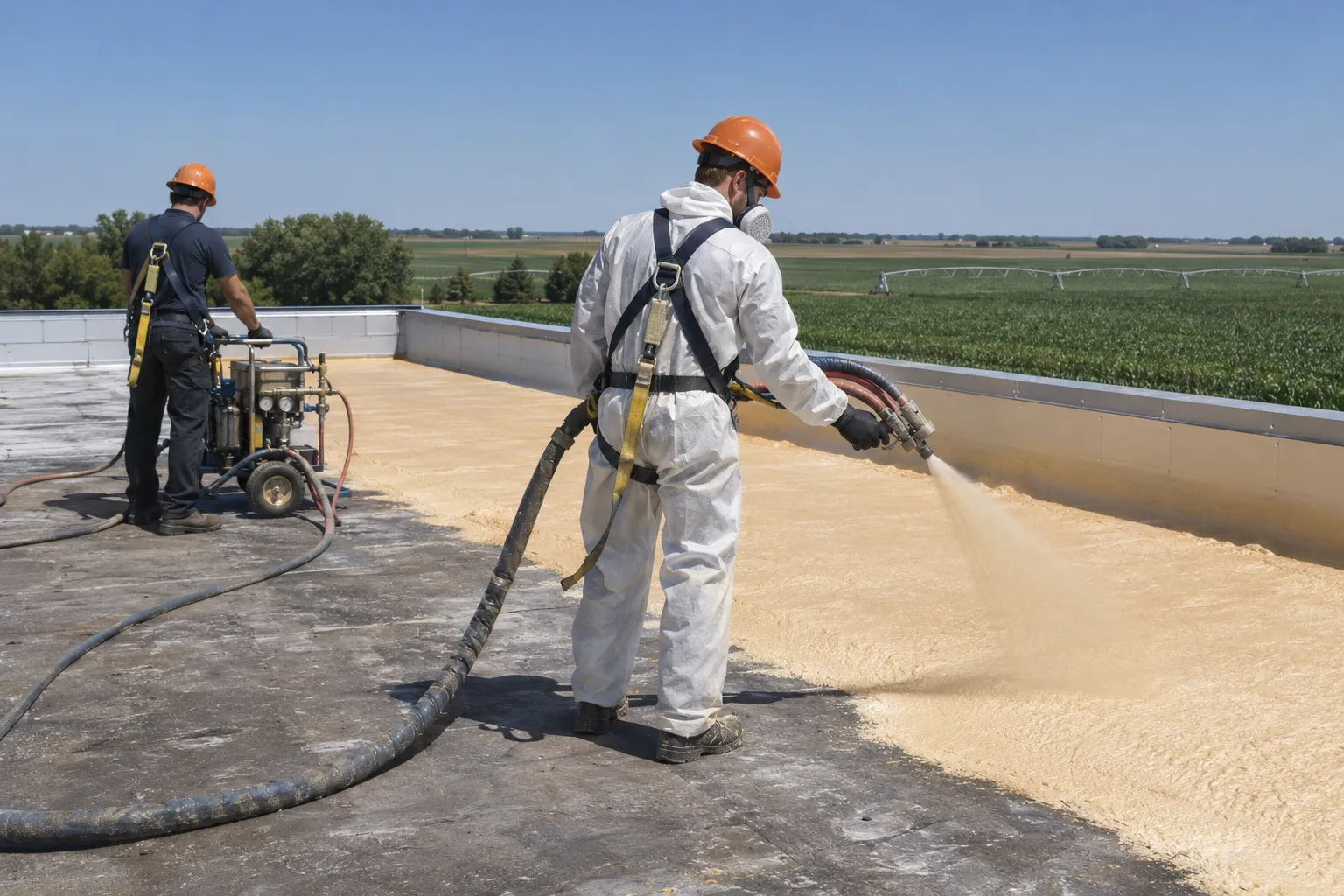
As a Hastings spray foam roofing contractor, we spray polyurethane foam over metal and flat roofs, then cover it with a top coat the same week.
Fit Check
Hastings spray foam roofing works over many roofs, but the deck under it decides the plan. Four cases we see often.
Heated shops gain insulation from foam sprayed right over the cleaned panels, with the flutes filled first so the surface is even.
Foam Over Metal
Foam can be built thicker at low spots to move water toward drains.
Tapered Foam
Overspray control and calm days come first in the plan.
Masked, Calm-Day Spray
Wet material must come out before any foam goes down.
Tear Out Wet Areas First
Roof Conditions
Foam closes seams and adds insulation, but these conditions have to be handled before or after spraying.
Spraying over wet insulation traps the water. A moisture survey finds wet areas, and those sections are cut out and replaced first.
Hail can bruise or puncture the top coat and foam. Those spots are cut out, refilled, and recoated so moisture stays out.
Sunlight breaks down uncoated foam within weeks. That is why the top coat follows the foam right away.
Thicker passes at the low end to push water toward a drain or scupper.
Spray drifts in wind, so spraying stops when gusts rise and nearby cars and units are covered.
Top coats wear thin from sun and foot traffic. Recoating before foam shows through keeps the foam itself intact.
Foam is the only system here that adds real insulation. This table shows what each system adds to the roof.
| System | Adds Insulation | Builds Slope | Upkeep |
|---|---|---|---|
| Spray foam with top coat | Yes, by foam depth | Yes | Periodic recoat |
| Silicone | Reflects heat only | No | Clean and recoat with silicone |
| Acrylic | Reflects heat only | No | Clean and recoat |
| Metal coating system | Reflects heat only | No | Spot repairs and recoat |
Benefits
Spray foam does two jobs at once. Here is what it adds to a Hastings building.
Foam adds R-value above the deck, which helps heated shops and storage buildings hold temperature.
Seams, screws, and penetrations are covered as the foam bonds to the deck,, screws, and penetrations as a single layer.
Extra passes at low spots build slope so water moves to drains instead of sitting.
A worn top coat can be cleaned and renewed, keeping the foam beneath in place.
Tell us the roof size and whether the building is heated. Foam depth depends on both, and we can start with a ballpark.
Process
Foam jobs move fast once spraying starts, so the steps before it are planned carefully.
A moisture survey and roof walk find wet insulation, deck damage, and the low spots foam needs to fill.
Wet insulation and damaged deck sections come out and are replaced before foam.
The deck is cleaned and dried. Units, vents, walls, and nearby vehicles are covered against overspray.
Foam goes on in passes to the planned depth, thicker at low spots to build slope.
A silicone or acrylic top coat goes on right behind the foam at the listed thickness.
Foam is not always the answer. These systems cover roofs where insulation is not the goal.
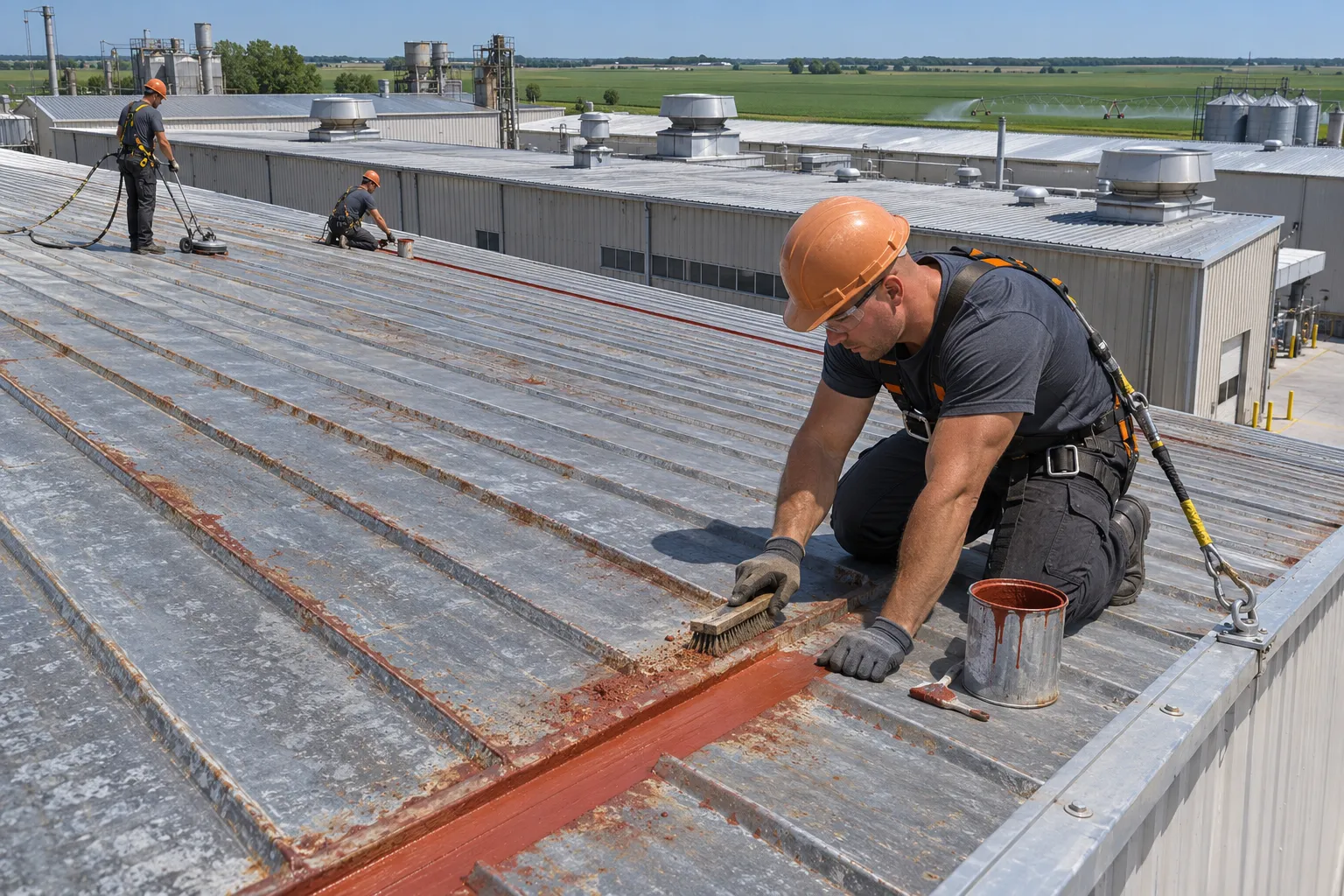
Unheated storage with solid steel often needs only rust, screw, and lap work under an elastomeric coating, which keeps the project lighter than a foam job.
Hastings Commercial Metal Roof Coating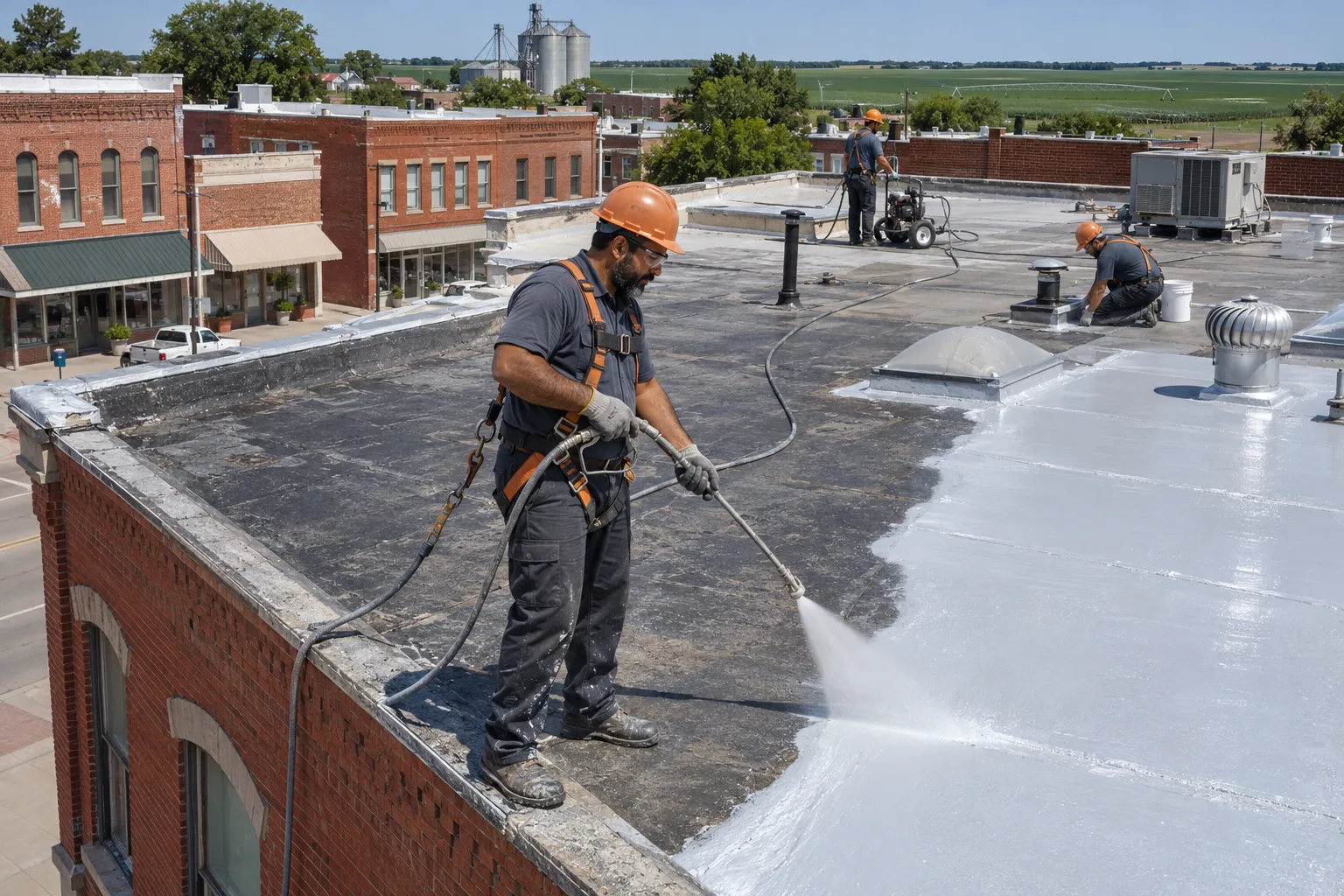
Silicone is the usual top coat over foam and also stands alone on ponding flat sections.
Hastings Silicone Roof Coating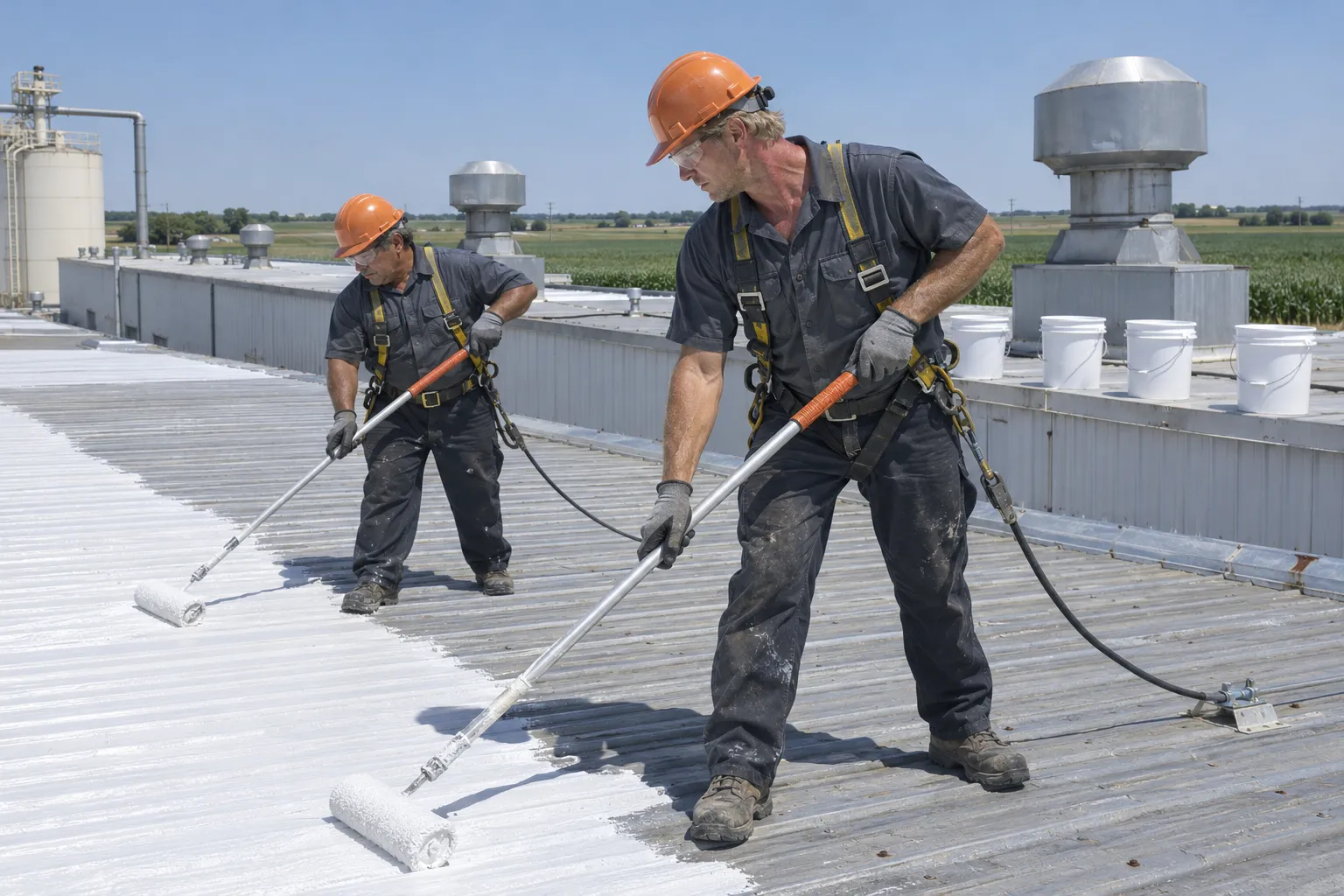
Sloped steel that drains quickly can skip foam and take acrylic base and top coats, applied in dry, mild weather after the screws and laps are sealed.
Hastings Acrylic Roof CoatingFAQ
Questions about spray foam roofs in Hastings.
It can, when foam fully covers the seams, screws, and penetrations. Foam bonds to the panels as one layer, but it needs a UV-resistant top coat right away. Wet insulation or rotted decking under the leaks has to be fixed first.
Foam is priced per square foot from an inspection, because foam depth drives most of the cost. For planning, our published ranges are about $2.50 to $4.00 per square foot for coating and about $5 to $8 for replacement, with depth, top coat, wet insulation, and access deciding the rest.
Depth is set by the insulation goal and the slope needed at low spots. A roof can get one depth across the field and extra passes near drains. The inspection and the foam maker's data set the numbers, and a probe checks depth during spraying.
The finished roof handles cold well, since foam insulates and the surface coat sheds snowmelt. Spraying is the limit: foam needs a dry deck and temperatures inside the maker's range, so foam work is scheduled for the warmer months.
Foam adds insulation and closes seams, and it can be built up to improve drainage. Against that, it needs dry weather and calm wind to spray, overspray has to be controlled, and the top coat must be renewed. Hail punctures need sealing promptly.
When the top coat thins enough to expose foam. Timing follows the original coat thickness, sun, and foot traffic, so a yearly walk and a check after hail show when it is close. Recoating before foam shows keeps the foam intact.
Yes, over solid steel that has been cleaned and dried. Loose screws are tightened, the panel flutes are filled, and foam is sprayed to the planned depth. Panels rusted through or a wet deck below are handled first.
Send your roof size for a ballpark, or call to talk through insulation and drainage.